

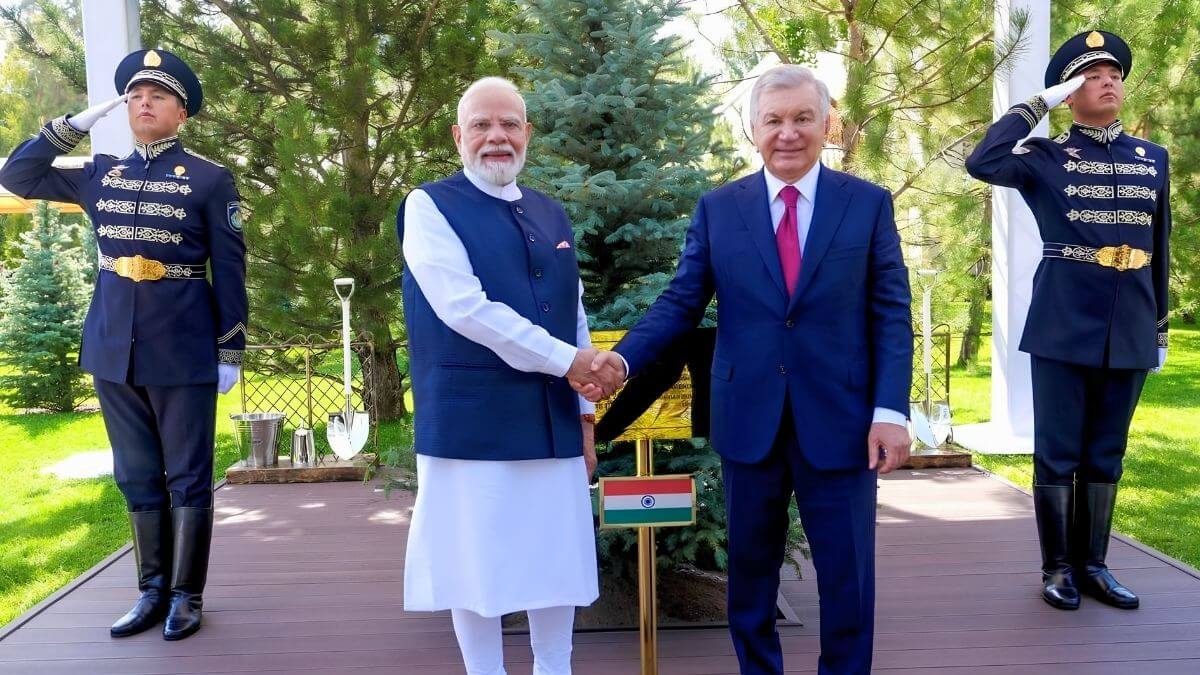
India and Uzbekistan on Sunday elevated their bilateral relationship to a Comprehensive Strategic Partnership following talks between Prime Minister Narendra Modi and Uzbek President Shavkat Mirziyoyev in Tashkent, marking 15 years since the two countries first established their strategic partnership.
The two sides agreed to establish a framework for long-term supply of uranium from Uzbekistan to India, a move linked to cooperation in the civil-nuclear energy sector and expected to support India’s nuclear power plans over the long term. Modi described the uranium arrangement as one of the biggest takeaways from the talks.
The two countries also set a target of $5 billion in annual bilateral trade by 2030. India and Uzbekistan inked 11 agreements covering sectors including mining and tourism, with talks focused on expanding cooperation across trade, investment, infrastructure, critical minerals, defence and security, agriculture, pharmaceuticals, health, information technology, digital public infrastructure including UPI and education. An MOU on mining was also signed as part of the agreements.
Modi said the new Comprehensive Strategic Partnership would be guided by concrete goals and an ambitious agenda aimed at delivering faster results. Mirziyoyev said Uzbekistan was determined to strengthen ties with India across sectors including energy, culture, critical minerals, pharmaceuticals, jewellery and agriculture, and that both sides would prepare roadmaps for each of these areas, with teams travelling between the two countries to define objectives.
There are now 14 direct flights a week connecting India and Uzbekistan, according to Mirziyoyev. India and Uzbekistan are also finalising three sister-city and sister-state agreements as part of efforts to deepen people to people ties.
During the visit, Modi was conferred with Uzbekistan’s highest honour for foreign leaders, the Order of Oliy Darajali Do’stlik, by President Mirziyoyev, in recognition of his contribution to strengthening friendship between the two countries.
