

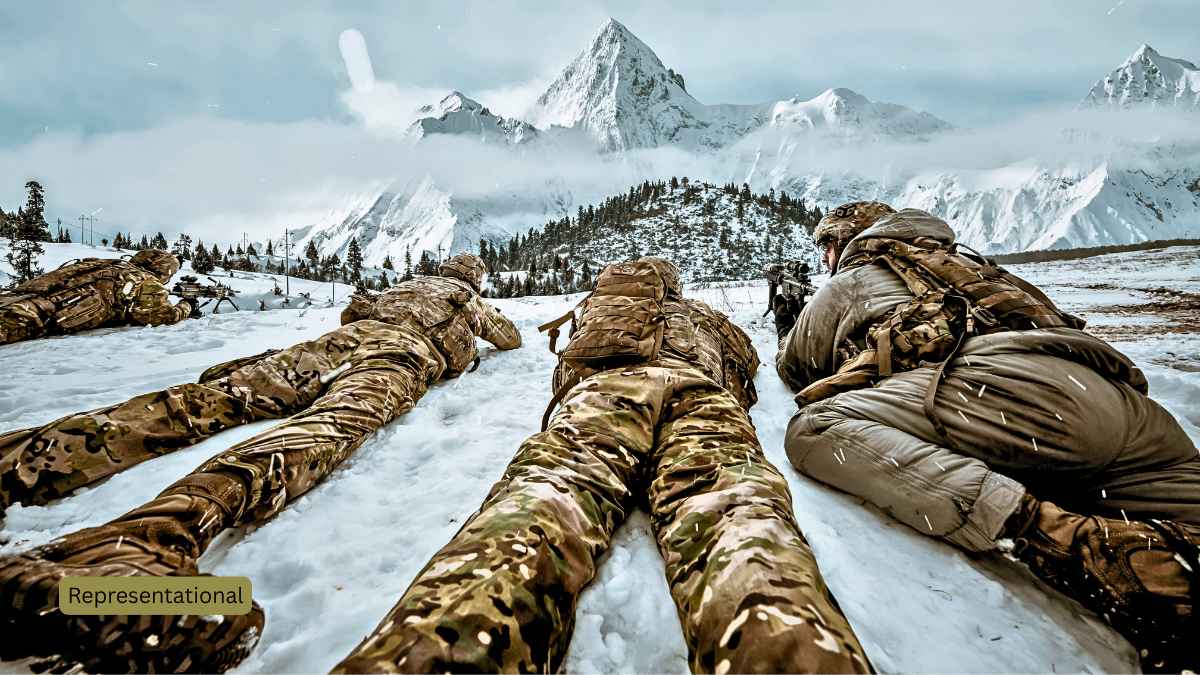
Around 400 soldiers, sailors and airmen from ten NATO nations took part in the Arctic Shield 2026 exercise in Greenland from September 7 to 18, a Danish-led operation aimed at strengthening the alliance’s ability to defend the territory on land, at sea and in the air.
The exercise was centred on southern Greenland around the village of Narsarsuaq, with additional activity around Kangerlussuaq further west. Denmark led the operation through its Defence Command and Joint Arctic Command, conducted in close coordination with the Greenlandic government, Naalakkersuisut. Participating nations included Denmark, Norway, Finland, Sweden, Canada, France, Belgium and the Netherlands, alongside Germany, Poland and Slovenia, whose involvement was limited to observers and logistical support.
The drills brought together a varied mix of capabilities, including French infantry units, marines from France and the Netherlands, a drone unit from Belgium, and special operations forces from Finland and Denmark. Home Guard units from Denmark, Norway and Sweden also played a significant role, while Canadian Arctic specialists shared their expertise on cold-weather operations with allied forces. The Danish Joint Arctic Command backed the exercise with helicopters, naval vessels, field medical facilities and logistical support throughout.
Arctic Shield formed part of NATO’s broader Arctic Sentry initiative, a wider effort to strengthen the alliance’s posture and coordination across the Arctic and High North. Running alongside it, a separate Canadian-led exercise, Nanook Tuugaalik, brought together naval and coast guard units from Canada, Denmark, France and the United States, including the US Navy’s Freedom-class littoral combat ship USS Wichita, which conducted maritime operations across the Labrador Sea, Davis Strait and Greenlandic fjords before shifting into Greenlandic waters under Joint Arctic Command oversight. Parallel air operations involving Danish, Canadian and American fighter jets were also carried out over Iceland, Greenland and Canada as part of NATO’s wider enhanced presence in the region.
The exercise reflects a broader increase in Danish and allied military activity in and around Greenland through 2026, as the territory takes on a growing strategic role within NATO’s northern defence planning amid increased attention on the Arctic from several major powers.
