

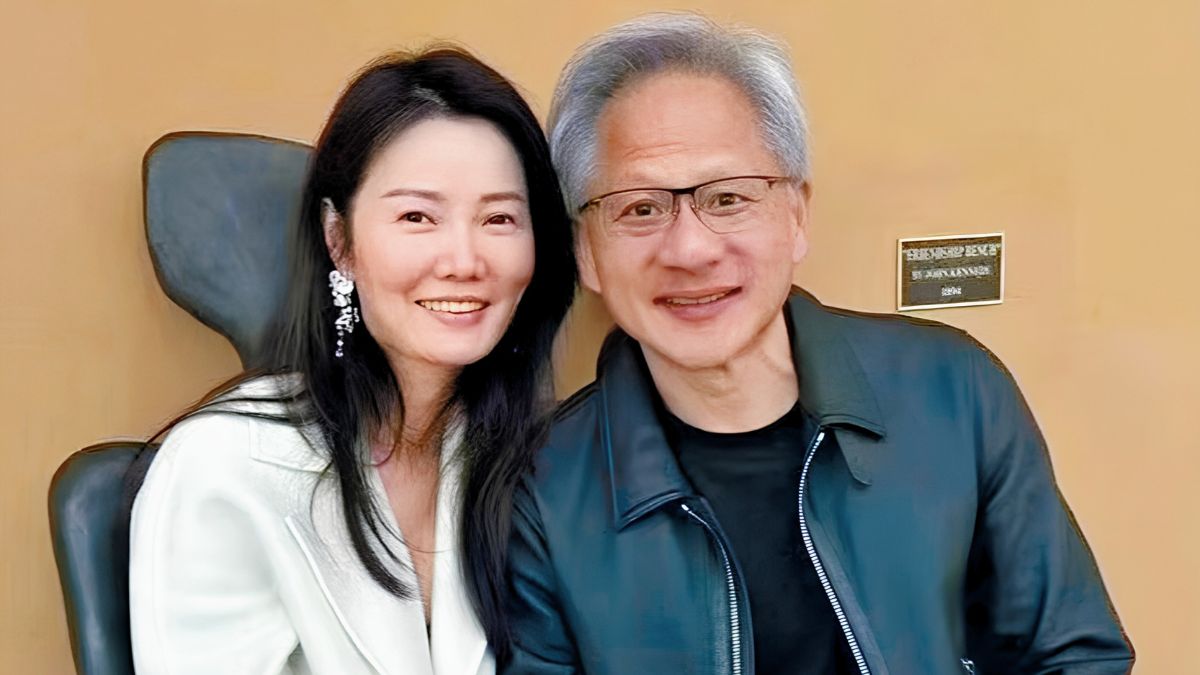
Alice Huang, the Chinese businesswoman at the centre of the controversy involving Nvidia’s former chief executive Jensen Huang, reportedly remained in contact with an official from China’s Ministry of State Security for more than a year while she was involved in an affair with the technology executive, according to a report by The New York Times.
Alice Huang reportedly maintained contact with an officer from China’s top intelligence agency from spring 2025 until autumn 2026, citing people familiar with intelligence reports describing the encounters. The reported timeline overlaps with at least part of her relationship with Jensen Huang.
Alice Huang previously headed Singapore-based Megaspeed International, a major Nvidia customer that reportedly accounted for billions of dollars in chip sales. US authorities have been investigating Megaspeed since 2024 over concerns that advanced Nvidia AI chips were being smuggled to China.
The latest report adds another layer to a controversy that has raised questions about intelligence operations, business relationships and the security implications of international semiconductor sales. Earlier reporting had alleged that Alice Huang was recruited by China’s Ministry of State Security to gather information about Jensen Huang and Nvidia. Those allegations have not been publicly established as fact.
US officials have repeatedly cautioned that they have not reached a conclusion on whether Alice Huang was a Chinese spy. Director of National Intelligence Jay Clayton said the investigation involving Huang and her company was continuing, while Attorney General Todd Blanche has also said the Justice Department has yet to determine whether she spied for China.
Jensen Huang’s spokesperson declined to comment on the latest report. Nvidia and the Chinese embassy in Washington did not immediately respond to requests for comment, while Reuters said it had been unable to reach Alice Huang.
The controversy has also prompted renewed scrutiny of Washington’s enforcement of semiconductor export controls, with lawmakers questioning whether US policy has adequately prevented advanced AI chips from reaching China.
